Turkish cuisine is one of the world’s great food traditions. These 16 dishes — from street-corner simit to imperial-era desserts — are the essential tasting list for any visitor.
Anatolia has been feeding empires for millennia, and modern Turkish cuisine is the delicious result — Central Asian nomad traditions, Ottoman palace kitchens and Mediterranean abundance on one table. Here are the 16 foods you simply have to try.
1–4: Kebab, Simit, Yogurt & Kahvaltı
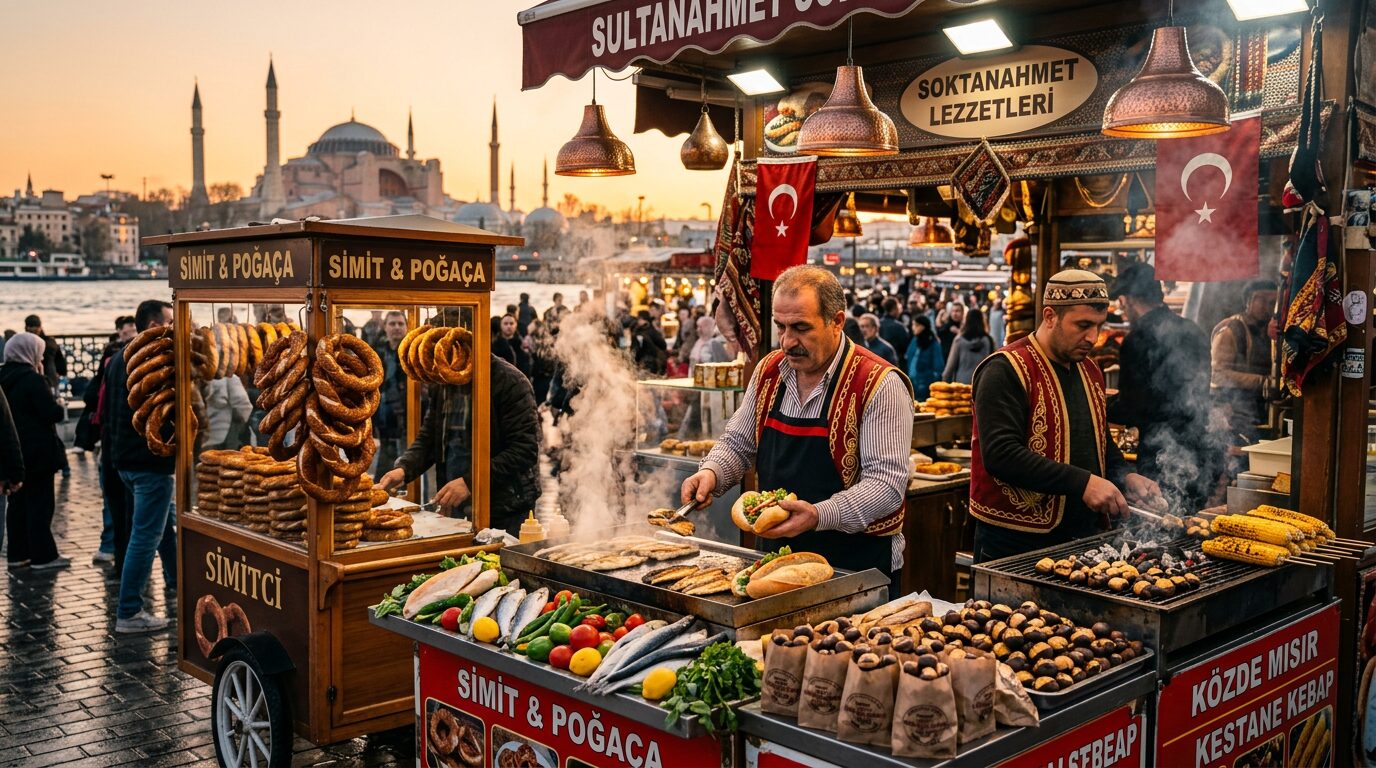
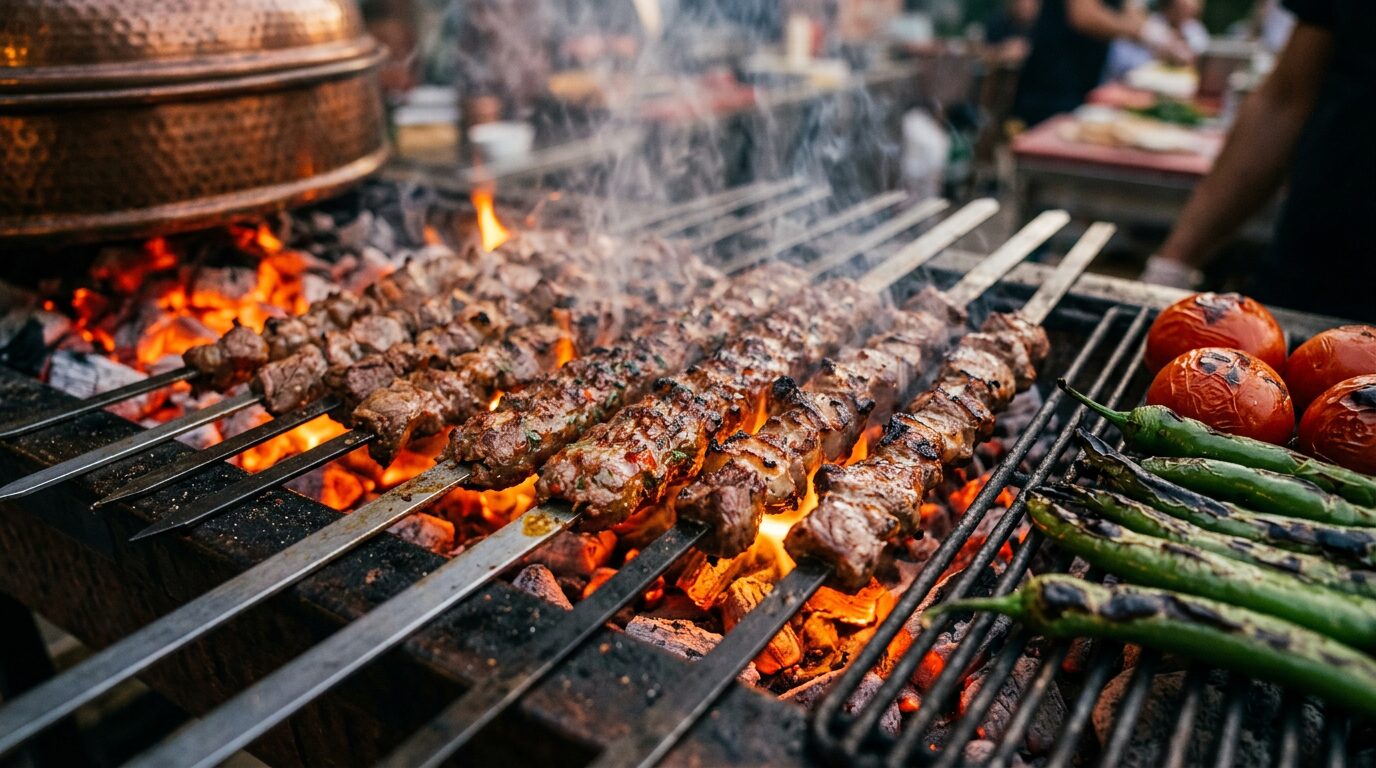
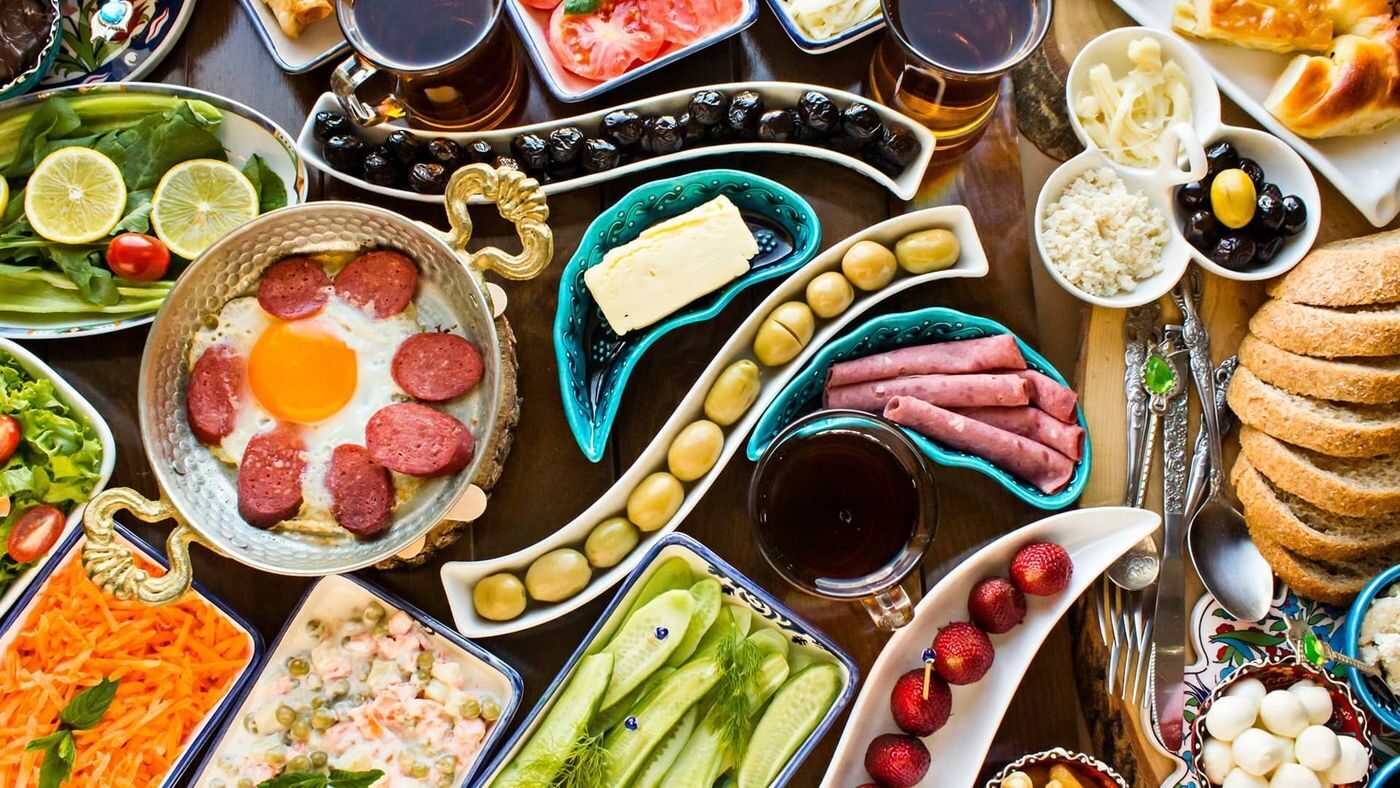
Kebab simply means “charcoal-grilled,” and the family is vast: the spicy Adana, the mellow Urfa, the Antep sandwiched between eggplant slices, the humble dürüm wrap in lavaş — and the king, İskender kebap, invented by İskender Efendi of Bursa in 1867: razor-thin lamb smothered in tomato sauce, yogurt and sizzling butter. Simit, the sesame-crusted bread ring, has been Türkiye’s original fast food since 16th-century caravans stocked up in İzmit. Yogurt is a national obsession — Turks eat over 2 million tons a year, plain, in cool cacık, or as salty, refreshing ayran. And kahvaltı, the Turkish breakfast, will convert any night owl: oven-fresh bread, cheeses, olives, tomatoes, honey and clotted cream, eggs with sucuk, and endless tulip glasses of tea.
5–8: Rose, Baklava, Nuts & Pide
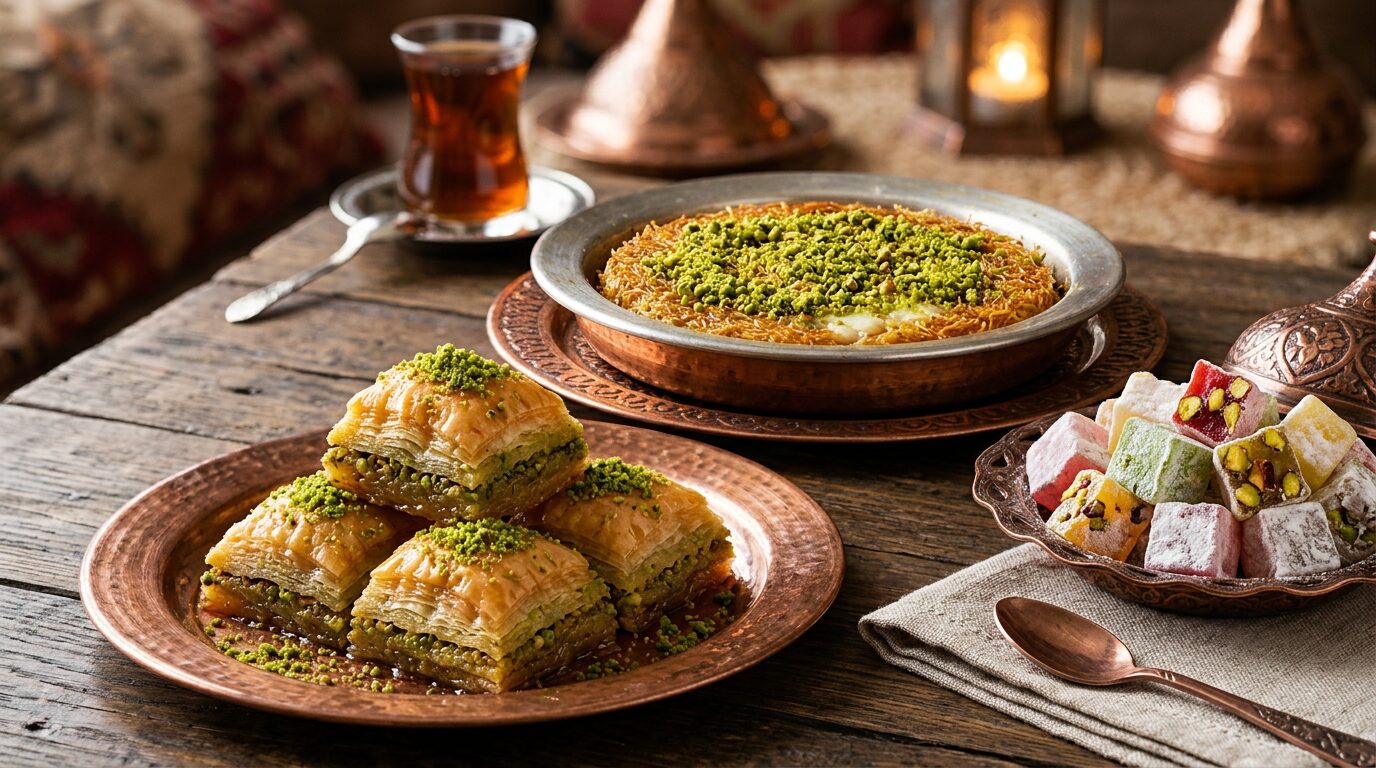
Rose perfumes Turkish sweets — rosewater lokum, the Ottoman güllaç and rose marmalade. Türkiye is the world’s biggest producer of Damascus roses, whose prized oil is a key ingredient in perfumes; the epicentre of production is Isparta, north of Antalya. Baklava is the Ottoman masterpiece: fine filo pastry, pistachios from Gaziantep, and honey syrup — indisputable baklava capital of the world. Nuts and fruit: Türkiye accounts for 75 % of the global hazelnut crop, grown in the Black Sea provinces of Giresun and Ordu — and ranks among the world’s top five producers of figs, cherries, pistachios, walnuts, melons and more. And pide, flatbread baked in a wood-fired oven with sucuk, mince or cheese, comes with a ritual: the cook breaks a raw egg on top as it comes out, keeping everything gloriously succulent. Its siblings — thin, herb-covered lahmacun; savoury börek; griddle-cooked gözleme — are equally irresistible.

9–12: Turşu, Maraş Dondurma, Mantı & Dolma
Turşu — Turks will pickle just about anything: eggplants, tomatoes, cabbage, plums, and — reportedly — even pine cones. The colourful displays in traditional turşucu shops are almost too pretty to eat. Maraş dondurma has the distinctly smoky taste of natural mastic and a chewy, stretchy texture from sahlep (made from the root of the rare Orchis mascula orchid) — served with an unforgettable sleight-of-hand performance by vendors in regional Maraş costume. Mantı — tiny hand-folded dumplings of Central Asian lineage — are served with fresh, tart yogurt, melted butter and chile flakes; Kayseri’s pride. Dolma and sarma — rice and meat stuffed into peppers, tomatoes or vine leaves, slowly braised — are a staple at nearly every Turkish table.
13–16: Kuru Fasulye, Kestane Şekeri, Tavuk Göğsü & Lokum
Kuru fasulye — creamy blond beans stewed in tomato gravy — has adherents whose sensitive palates can distinguish which usta (master cook) made the dish from among the thousands of beaneries across the country. Kestane şekeri, Bursa’s sugared chestnuts, have roots stretching back to the 1300s. Tavuk göğsü surprises every first-timer: this Ottoman court dessert of boiled chicken breast, milk and sugar dusted with cinnamon is — perhaps surprisingly — delicious; the caramelised version, kazandibi, is even more indulgent. Finish with Turkish delight (lokum) — from the Arabic for "morsels," sold in dazzling flavours dusted with icing sugar — alongside a copper-pot Turkish coffee. Coffee first appeared in Istanbul in the 16th century, lending its name to breakfast (kahvaltı = "before coffee") and even the colour brown (kahverengi = "coffee-coloured"). A good host will turn your empty cup upside down and divine your fortune from the grounds.
Taste It All With Us
The best way to eat Türkiye is with someone who knows every back-street lokanta. Join a guided food walk in Istanbul or Gaziantep on our tours, or build a culinary itinerary with our AI planner — breakfast in Van, baklava in Antep, fish on the Bosphorus.
Frequently Asked Questions
What food is Turkey famous for?
Kebabs (especially İskender and Adana), meze, baklava, Turkish delight, mantı dumplings, pide, simit, Turkish breakfast and Turkish coffee — a cuisine ranked among the world’s greatest.
What is a traditional Turkish breakfast?
A spread of cheeses, olives, tomatoes, cucumbers, honey with clotted cream (bal-kaymak), jams, eggs with sucuk sausage, fresh bread and unlimited black tea.
What dessert should I try in Turkey?
Baklava with Gaziantep pistachios is essential; also try künefe (hot cheese pastry), Maraş ice cream, kestane şekeri (candied chestnuts) and authentic lokum (Turkish delight).
Plan Your Türkiye Trip With Local Experts
Licensed TÜRSAB agency — tours, transfers, visas and tailor-made itineraries across Türkiye.