Istanbul's museums span 6,000 years of history — from Sumerian artefacts and Alexander's Sarcophagus to stunning Byzantine mosaics and the fortress that sealed Constantinople's fate.
Istanbul is one of the world's great museum cities. Its extraordinary position as the capital of the Byzantine and Ottoman empires has filled its institutions with treasures that span millennia. Here is a guide to the essential museums you should not miss.
Istanbul Archaeological Museum
This complex was built in the late 19th century by architect Vallaury, thanks to the great efforts of the famous Turkish painter Osman Hamdi Bey. It includes the exquisite Tiled Kiosk and the Museum of the Ancient Orient, and houses a large collection of artefacts from ancient Greek, Roman and Anatolian civilisations dating back to the 6th century BC. The Sarcophagus of Alexander the Great and the Sarcophagus of the Mourning Ladies — among the most celebrated works of antiquity — are among its highlights.
The Ancient Eastern Archaeological Museum, designed by Halil Eldem Bey and opened in 1917, displays around 15,000 archaeological pieces from Ancient Mesopotamia, pre-Greek Anatolia, Assyrian, Sumerian, Acadian, Babylonian, Ancient Egyptian and pre-Islamic Arabic cultures.
Hagia Sophia (Aya Sofya)
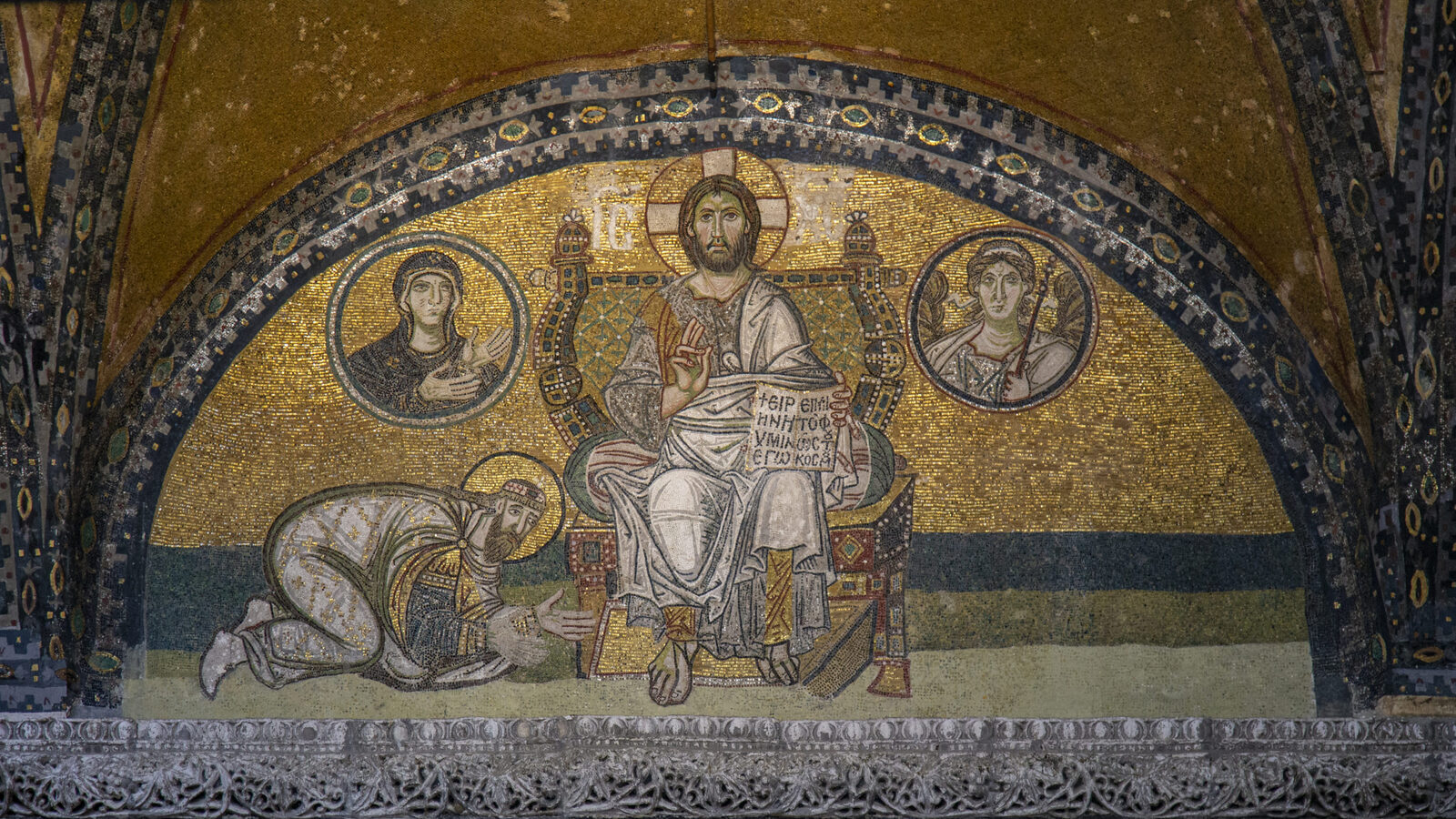
The ancient Byzantine church, built by Justinian I between 532–537 AD after the Nika Riot, was later converted to a mosque with the addition of minarets in the mid-15th century. With its 56-metre-high immense dome, it was for about 1,000 years the largest church in the world and the glory of the Byzantine Empire. The remarkable structure now functions as a mosque where you can see both outstanding Christian Byzantine mosaics and Islamic art. A true once-in-a-lifetime monument that defines Istanbul's skyline.
St. Savior in Chora (Kariye) Museum
An ancient Byzantine church first built in the 6th century AD as a monastery, Chora was restored several times in the 9th, 11th and 12th centuries, and finally renovated in the 14th century by Theodore Metochites, a minister of the Byzantine Empire, from whose era the best mosaics survive. Converted into a mosque after the Conquest in the 15th century, it is today a museum housing some of the finest Byzantine mosaics and frescoes anywhere in the world. The typical Ottoman neighbourhood of wooden houses surrounding it is also a pleasure to stroll through.
Fethiye Mosque (Pammakaristos Church) Museum
Built in 1261 and dedicated to the Virgin "Pammakaristos" (The Most Happy), this Byzantine church served as the seat of the Christian Orthodox Patriarchate from 1455 until 1587, then was converted into a mosque and renamed Fethiye. Its parekleison (burial corridor) is open as a museum where you can see beautiful Byzantine mosaics and frescoes from the 14th century — a quiet gem that many visitors to Istanbul overlook entirely.
Islamic Sciences & Technology History Museum
One of the newest museums of Istanbul, opened by the Metropolitan Municipality in May 2008 at Gülhane Park near Topkapı Palace. The museum presents plans, copies and replicas of inventions by Muslim scientists from the 8th to the 16th centuries — showcasing the extraordinary scientific and technological contributions of the Islamic world that long preceded the European Renaissance.
Adam Mickiewicz Museum
The Polish Romantic poet Adam Mickiewicz was arrested by the Russian police in 1823 for protesting Russian control of Poland, jailed and then exiled. After his release, he spent the rest of his life in Western Europe and Turkey, where he continued writing. He died during a cholera epidemic in Istanbul in 1855. His house in the Tarlabası neighbourhood near Beyoğlu was converted into a museum in 1955 to mark the 100th anniversary of his death. Inside you will find documents, photographs of Constantinople from that era, information about the Polish Liberation struggle and a symbolic grave of the poet in the basement.
Galata Mevlevihane Museum
With its historical main door at one end of İstiklal Street, Galata Mevlevi Lodge awaits you at the beginning of Galip Dede Street in Beyoğlu. This lodge — also called Galata or Kulekapısı Mevlevi Lodge or Galip Dede Tekke during the Ottoman era — was established in 1491 and represents one of the most important Ottoman works in Beyoğlu. Opened to visitors in 1975 as the Divan Literature Museum, it was reorganised as the Galata Mevlevi Lodge Museum in 2011, offering a fascinating window into the world of the Sufi whirling dervishes.
Rumeli Fortress Museum
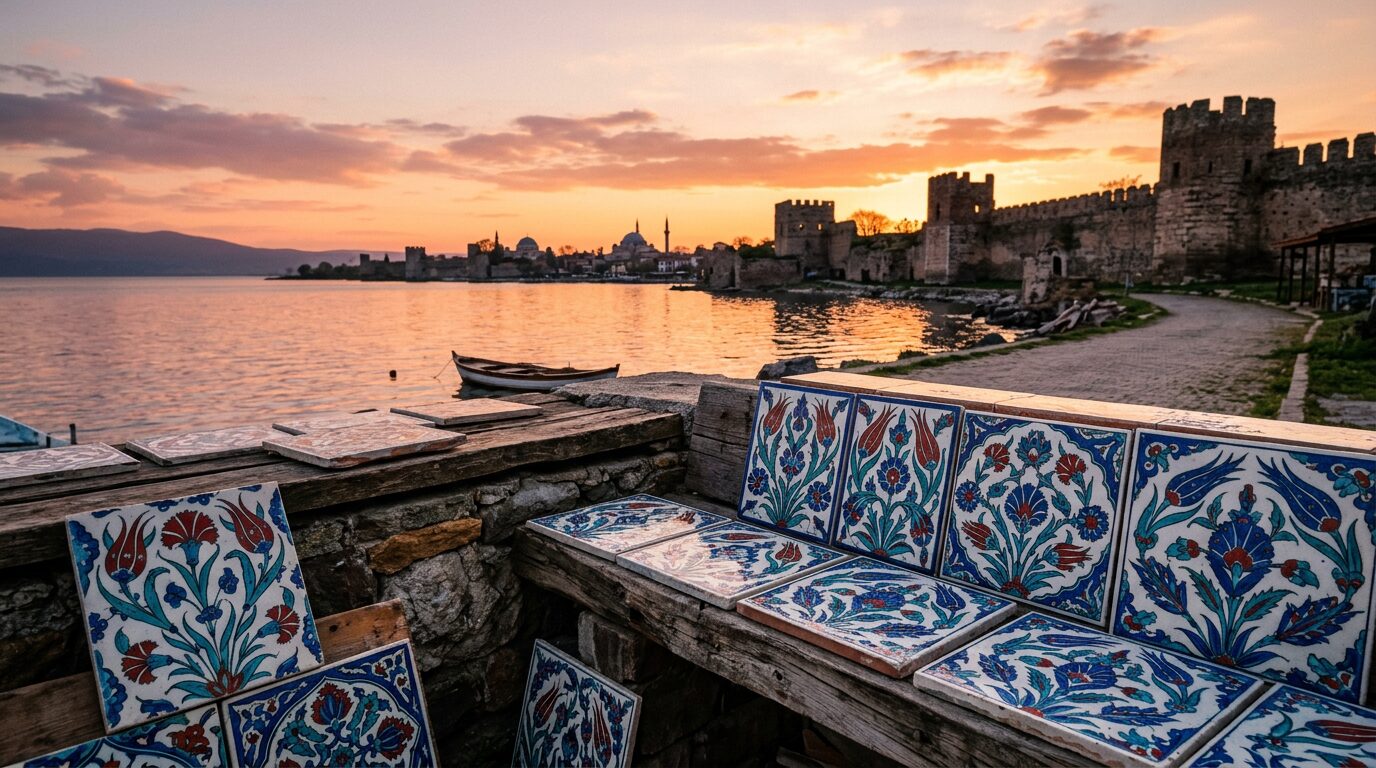
Built by Mehmet the Conqueror in just four months in 1452, Rumeli Fortress covers a 30-acre area in Sarıyer and was constructed to prevent attacks and block aid from the Black Sea before the conquest of Istanbul. Located opposite the Anadolu Fortress (built by Sultan Bayezid I in 1394), it sits at the narrowest point of the Bosphorus. Restored as a museum in 1953 and opened to visitors in 1968, its lush garden displays cannonballs, iron balls and a section of the chain once stretched across the Golden Horn to block enemy ships. The view of the Bosphorus from the garden alone is worth the visit.
Anatolian Fortress (Anadolu Hisarı) Museum
Anadolu Hisarı is located on the Asian shore of the Bosphorus where the Göksu River meets the sea. Commissioned by Sultan Yıldırım Bayezid in 1394 to besiege Istanbul and obstruct Byzantine aid from the Black Sea, it was renovated in 1452 by Sultan Mehmed the Conqueror during the construction of Rumeli Fortress across the strait. The fortress later served as a prison and played an important role in stopping Kazakh attacks on the Bosphorus in the 17th–18th centuries. Today it is one of the most beautiful historic spots in Istanbul.
Planning Your Museum Visits
The Istanbul Museum Pass covers 15 museums including the Archaeological Museum and Topkapı Palace, offering significant savings and skip-the-queue access. Most museums close on Mondays. Turquaz Travel can arrange private guided museum tours — contact us to build your Istanbul itinerary.
Frequently Asked Questions
Which museum in Istanbul is the most impressive?
The Istanbul Archaeological Museum (home to Alexander's Sarcophagus) and the Chora Museum (Byzantine mosaics) are frequently cited as Istanbul's most extraordinary museum experiences alongside Hagia Sophia.
Is the Istanbul Museum Pass worth it?
Yes — the Museum Pass covers 15 attractions including Topkapı Palace, the Archaeological Museum and Hagia Sophia for a flat fee, plus priority entry at most sites.
How much time should I allow for the Archaeological Museum?
The archaeological complex has three museums. Allow at least 3 hours to see all three — the main museum, the Ancient Orient Museum and the Tiled Kiosk.
Plan Your Türkiye Trip With Local Experts
Licensed TÜRSAB agency — tours, transfers, visas and tailor-made itineraries across Türkiye.