Founded 9,000 years ago, Çatalhöyük is the first known city in the world — where urban life, art and religion began. Here is why this UNESCO site near Konya deserves a place on every traveller's itinerary.
Çatalhöyük is a city founded 9,000 years ago, and this UNESCO World Heritage Site is well worth visiting to see the remains of an ancient (like, REALLY ancient) city. At the moment, Çatalhöyük is the first known city in the world — the first place where surrounding villages came together, formed a central location and began the kind of urban civilisation that dominates the modern world. What we see at this incredible site is a large city (upwards of 10,000 people at its height) where humans came together, developing not only practical skills but also the earliest roots of art, religion and culture.
Equally remarkable is the sheer longevity of the city. It existed for over 2,000 years in various forms — an extraordinary feat compared with many modern cities. Çatalhöyük is in the Çumra county of Konya province and was discovered in 1958. Comprehensive scientific studies and excavations have been carried out on various dates since then.
The History
Çatalhöyük was settled primarily between 7500 BC and 5700 BC. The name is Turkish, meaning "forked hill." It is unknown exactly why this spot was chosen — or why it was eventually abandoned — but a river once flowed between the two hills that make up Çatalhöyük, with the settlement itself built on alluvial clay, making it particularly amenable to agriculture.
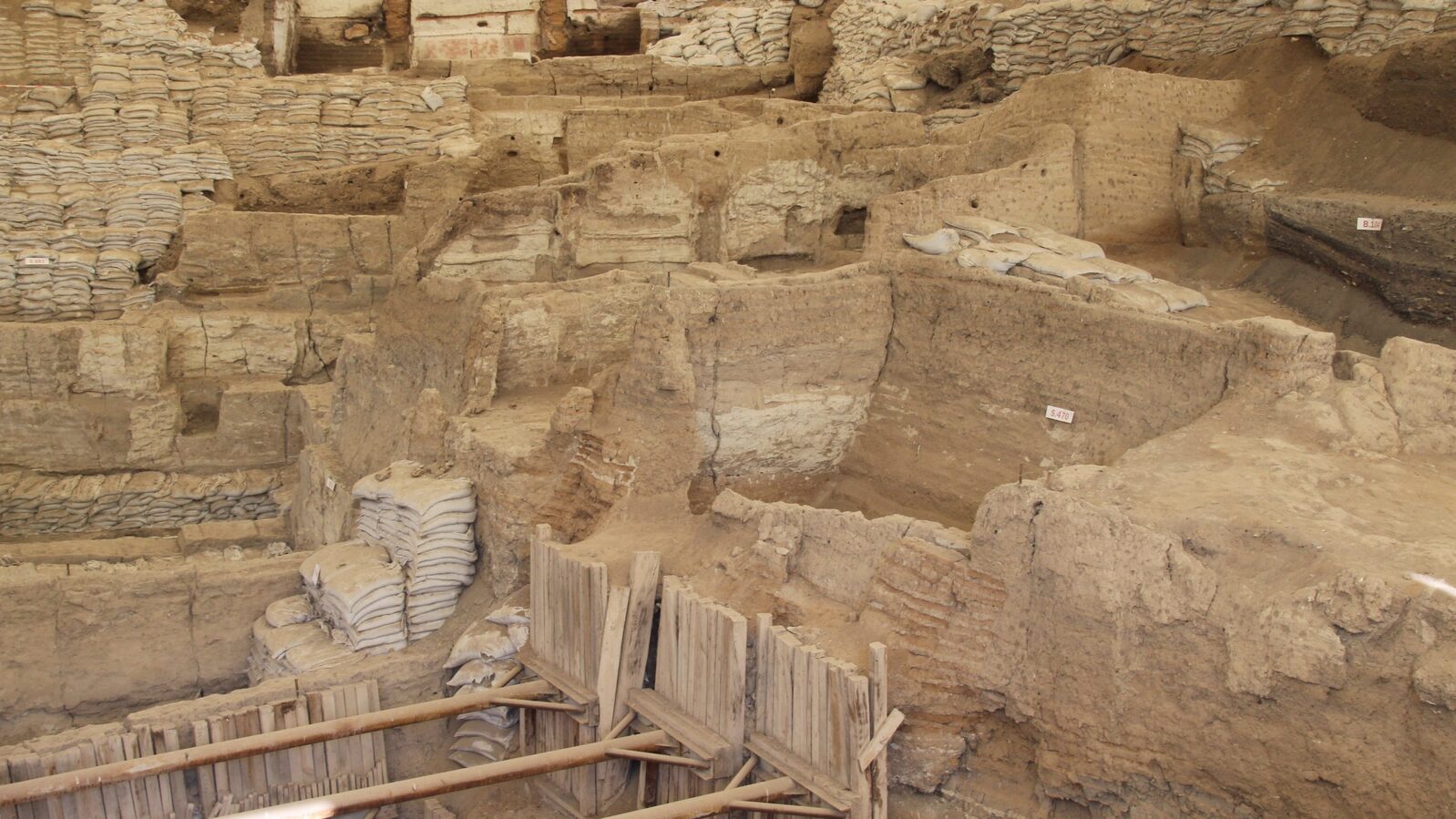
The city appears to have been truly residential, with no known public buildings discovered to date. The population probably fluctuated between 5,000 and 7,000 people, reaching a maximum of around 10,000 at its height. Mudbrick houses were clustered very closely together in a honeycomb-like maze, with entrances through holes in the ceilings reached by ladder rather than street-level doors. Residents walked along the rooftops between houses — the roofs functioned as practical streets as well as a source of ventilation.
The society also appears to have been remarkably egalitarian, with no houses bearing the marks of a ruling class. Men and women appear to have been largely equal, sharing the tasks of ritual, artwork, farming, hunting and cooking.
The Art
As farming techniques developed, so too did the artwork. The walls of the houses in Çatalhöyük are filled with images and scenes — many of which echo the same patterns found in modern kilims, suggesting just how far back these designs reach into human history. Bull skulls mounted on walls, figurines of corpulent female figures (likely mother-goddess representations), and hands of ochre stencilled on plaster are among the most striking finds. Wall paintings at Çatalhöyük include what may be the world's first landscape paintings and representations of erupting volcanoes — extraordinary evidence of early human artistic expression.
What You Can See When You Visit
When you visit Çatalhöyük, you will walk through two partially excavated mounds (the East Mound and the West Mound) along elevated boardwalks that allow you to look directly down into the exposed rooms of 9,000-year-old houses. Two large shelters protect the most sensitive areas of the excavation. The on-site museum displays original artefacts including figurines, tools, jewellery and the famous mother-goddess statuette discovered here. Guided tours are available and strongly recommended — the context and stories brought to life by a knowledgeable guide transform the site from fascinating ruins into a vivid window into the dawn of human civilisation.
Çatalhöyük is about 60 km south of Konya city centre. Turquaz Travel can include it as part of a central Anatolia heritage itinerary — contact us to plan your trip.
Frequently Asked Questions
Why is Çatalhöyük considered the world's first city?
Çatalhöyük is the earliest known large settlement where thousands of people lived together in a structured urban community with evidence of art, religion and shared social life — predating other known urban centres.
How do I get to Çatalhöyük from Konya?
Çatalhöyük is approximately 60 km from Konya city centre. It can be reached by private car or taxi. Turquaz Travel can arrange a private guided day trip combining Çatalhöyük with other Konya attractions.
What is the best time of year to visit Çatalhöyük?
Spring (April–May) and autumn (September–October) are ideal — the site is largely outdoors and summers in central Anatolia can be very hot. The site is open year-round except on Mondays.
Plan Your Türkiye Trip With Local Experts
Licensed TÜRSAB agency — tours, transfers, visas and tailor-made itineraries across Türkiye.